
3 August 2026

The Ag Emissions Centre and AgriZeroNZ are supporting US-based startup Altraea and the Bioeconomy Science Institute (BSI) to accelerate their projects from scientific discovery to practical emissions reduction tools.
Each project has received a $1 million boost after applying for the annual Innovation Investment Round, run in partnership by the Ag Emissions Centre and AgriZeroNZ, which helps accelerate the development of practical emissions reduction tools for New Zealand farmers.
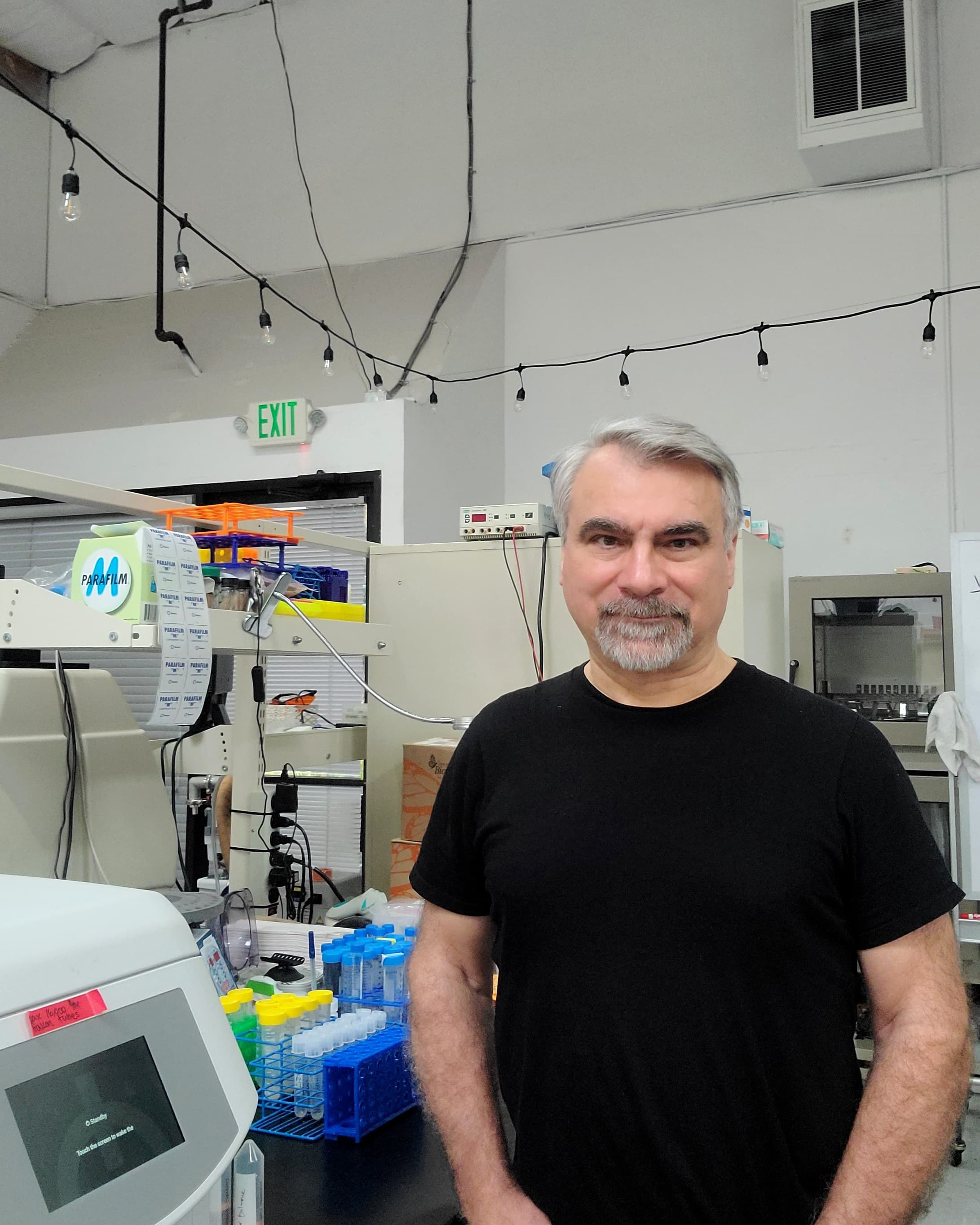
Dr. George Rudenko, Altraea founder
Altraea, in partnership with New Zealand scientists from BSI, is developing a microalgae-based feed additive.
Altraea is seeking to engineer microalgae in a way that, when fed to ruminants, reduces methane emissions while also improving productivity by redirecting the energy normally lost in methane production.
The company aims to develop a scalable, fermentation-based solution that integrates into existing feed systems and delivers strong economic and environmental benefits.
Altraea founder, Dr. George Rudenko, says the funding boost will help advance candidate discovery and validation toward scalable solutions.
“We're grateful to AgriZeroNZ and the Ag Emissions Centre for supporting this collaborative effort. Bringing together Altraea's microalgae technology with the expertise of BSI creates a unique opportunity to accelerate the discovery and validation of scalable methane solutions that benefit both farmers and the environment.
“We're excited to be part of New Zealand's innovation ecosystem and look forward to working closely with our partners over the next two years.”
The Climate Change and Forage Innovations team at BSI is aiming to develop methane-reducing proteins that would get added to supplementary livestock feed.
These proteins, called nanobodies, are small, stable proteins that continue working in the rumen environment. By linking several nanobodies together, researchers aim to target multiple methane-producing microbes at the same time, making them less able to generate methane.
The team is currently identifying and selecting the most effective nanobodies. Once the best candidates have been found, they can be produced at large scale using precision fermentation, a well-established manufacturing process used worldwide to make products such as health supplements and medicines.
Dr Somrutai Winichayakul, from the Bioeconomy Science Institute, says the long-term goal is to add these protein products to supplementary livestock feed, providing farmers with a practical tool to help lower methane emissions from their animals while maintaining farm productivity.
“This is a good example of how high-quality research supported by solid scientific knowledge has the potential to rapidly develop, test, and apply new technologies for effective reductions in GHG emissions.”


