
17 March 2026

Synlait supplier Athol New is one of 12 farmers sitting on the Farmer Focus Group working with AgriZeroNZ.
This article is from Synlait's farmer magazine, Leading Edge.
The main thing he wants farmers to know about the partnership is simple: “AgriZeroNZ is not there to force farmers to do anything, it’s there to help find tools and solutions.”
The public-private partnership has invested in 11 ventures and expects they will have a range of tools ready for farmers to use before 2030.
Athol says AgriZeroNZ is doing an important job.
“They are making sure those developing the tools are considering their suitability for pasture-based systems like ours. Without AgriZeroNZ, New Zealand is such a small market, we would likely not have access to some of the tools being developed.”
The role of the Farmer Focus Group, that Athol is part of, is to provide practical advice to developers so they can ensure their product will work for Kiwi farmers.
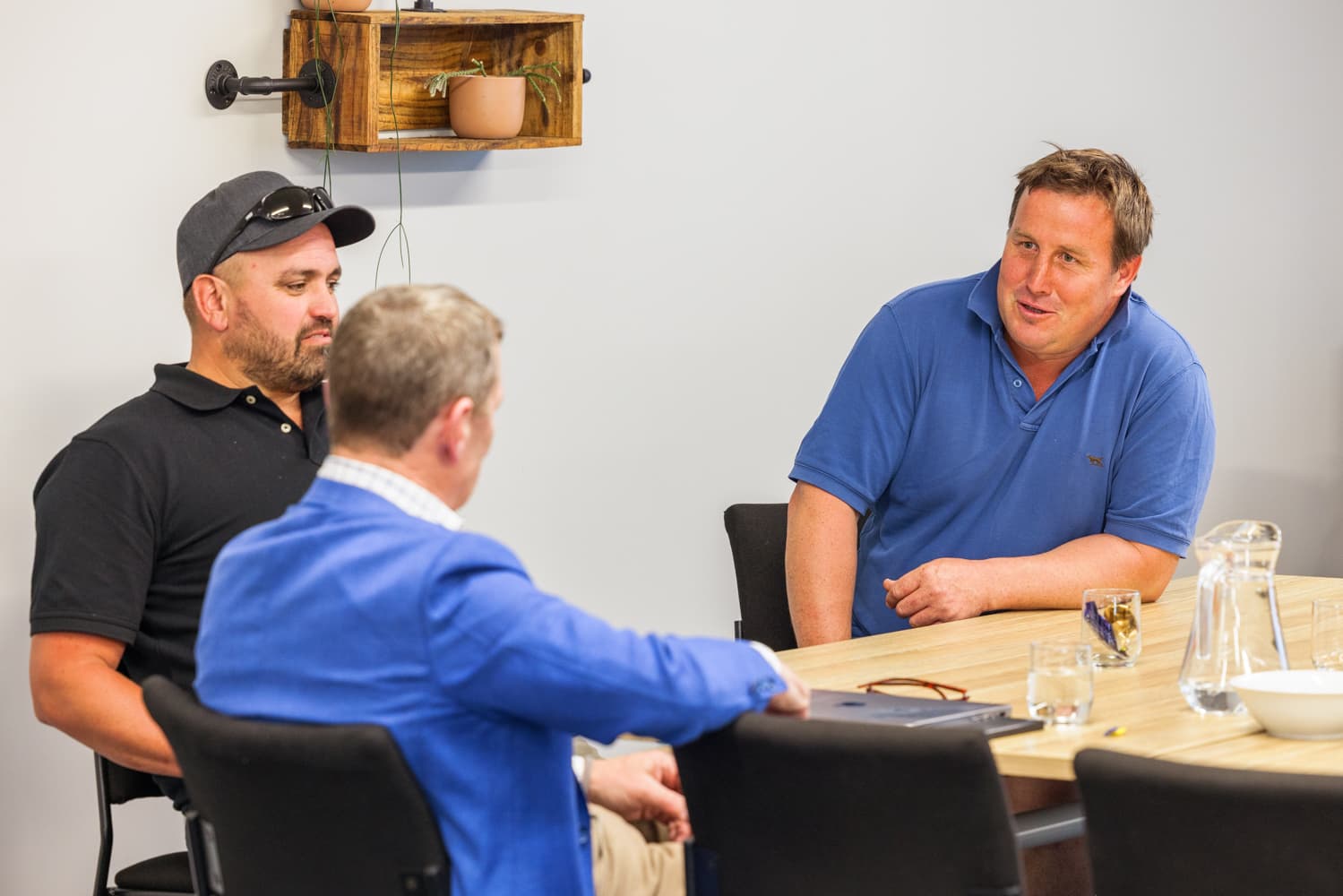
Athol discussing emissions reduction tools at a recent Farmer Focus Group meeting
“We want them to develop tools that are profitable, painless and easy to use so New Zealand farmers will adopt them. Our farmers are currently among the most efficient in the world, however, this technology will help overseas competitors catch up so we need to work hard so we stay ahead of the pack.”
The standard of what’s being produced has impressed Athol.
“There are some very smart people doing some very impressive things,” he says.
Examples include:
NZ-founded BioLumic that is utilising light to develop a low-emissions ryegrass with increased productivity gains.
Hoofprint Biome Inc, an American company developing natural enzymes and probiotics to improve cattle health while reducing emissions and improving productivity.
Australian agri-biotech Nbryo that has developed a technology platform that enables the production and transfer of high-quality embryos at scales so farmers can breed more emissions efficient livestock faster.
As reported in Leading Edge last month, the first tool expected to make it to market is Ruminant Biotech’s slow-release methane-inhibiting bolus.
“While this will be great for farmers treating smaller stock, it’s not a practical application for those with 400 plus-kilo animals. That’s why it’s important AgriZeroNZ is investing in a range of tools – so farmers can pick and choose what works for them.”
Athol says emissions reduction won’t be the only reason for farmers to consider using these tools.
“We have been very clear to AgriZeroNZ, and those developing the new technologies, they have to improve on-farm profitability or they won’t get traction.”
Over time, Athol expects farmers will use the new technology.
“The global customers who buy New Zealand food have the power to drive real change in the way we farm before our governments act. For example the new regulations on tail docking only came into effect in 2018 but majority of farmers had already changed before then because of customer demand.”
“At the end of the day, adapting these new technologies will take time to embed but, just like action on nitrates and advances like sexed semen, they will take off and become the new way of doing things. And, my personal view is, that our farming businesses will be better for it,” says Athol New.


