
31 July 2026

Bruce Smith (Tnue Managing Director), Hon Todd McClay, and Ingar Dolk (Tnue Director) at the Tnue factory opening in Taupō.
We’re investing in a trial to test whether Tnue’s controlled-release nitrogen fertiliser can reduce nitrous oxide emissions.
New Zealand company, Tnue (Total Nutrient Use Efficiency), uses geothermal energy to produce a urea fertiliser which is coated with a unique membrane that slows the release of nutrients.
By releasing the nitrogen progressively over about three months – rather than all at once like regular fertilisers – it can better align nutrient supply with plant demand, reducing nitrate leaching and nitrous oxide emissions.
The trial we’re investing in will assess the impact of Tnue’s controlled-release fertiliser on mitigating the overall emissions from urea. The Bioeconomy Science Institute will undertake the four-month trial, where regular gas samples will be taken to measure nitrous oxide and ammonia emissions from four different fertiliser treatments.
Bruce Smith, managing director of Tnue, said: “This research is important to New Zealand because reducing agricultural greenhouse gas emissions is essential to maintaining the long-term competitiveness of our export markets. The industry is committed to finding practical emissions reduction solutions that not only lower environmental impacts but also enhance farm productivity and profitability.”
Results from the trial are expected early 2027.
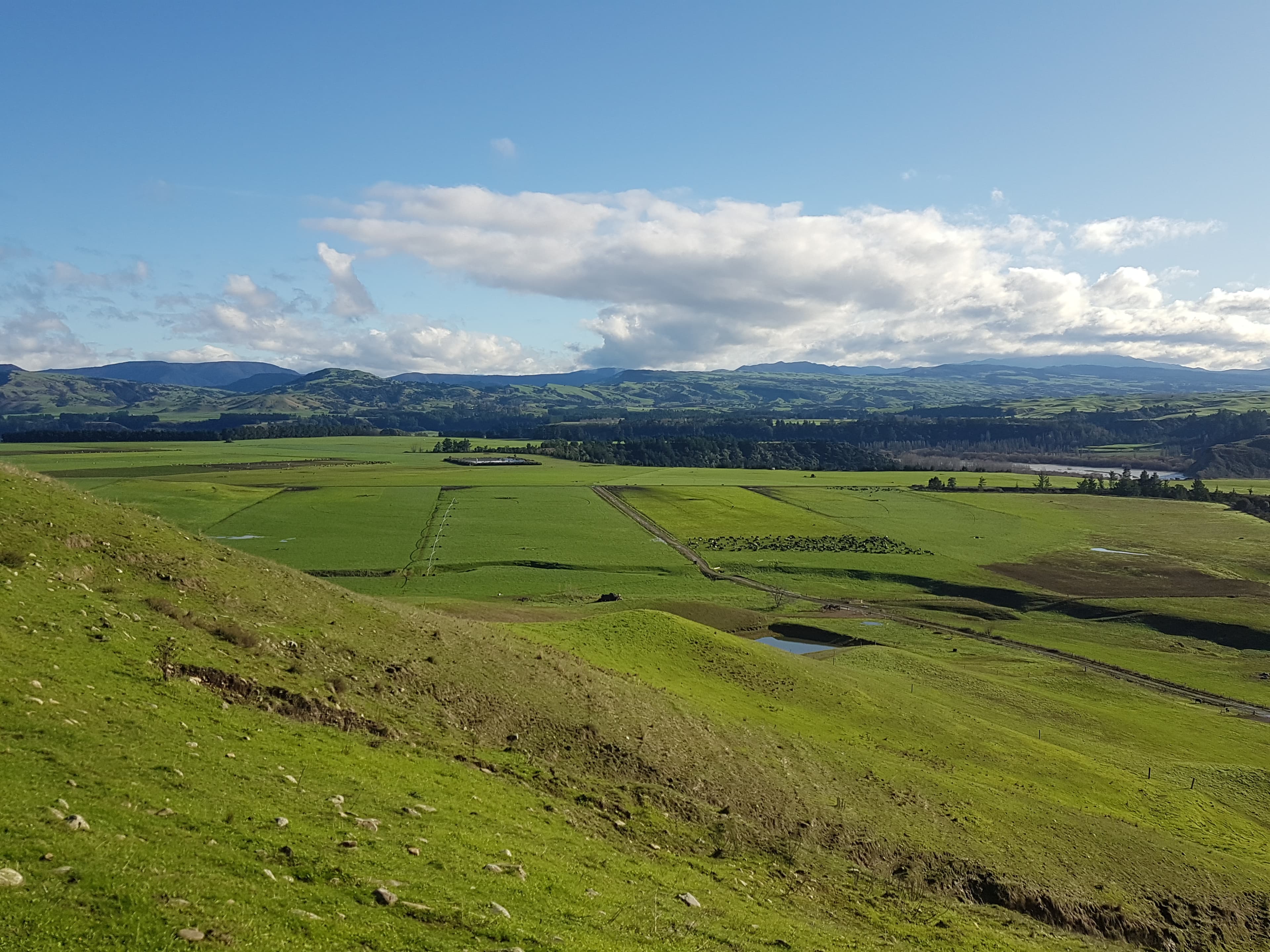
A dairy farm in Hawke's Bay which uses Tnue's controlled-release nitrogen fertiliser.


